

Critical Role of Modern Surgical Drape Packs
Critical Role of Modern Surgical Drape Packs
2026-08-12 17:59
The Silent Guardian of the Surgical Field
Before the first incision, a critical protocol unfolds: the creation of a sterile field. At the heart of this protocol lies the surgical drape pack—a system so fundamental it’s often overlooked. Yet, its role is paramount. Modern drape packs are not passive covers; they are the first, active layer of defense against infection, a key organizer of the surgical workspace, and a vital tool for patient and team safety.
From Linen to Engineering: How Surgical Drape Packs Transformed Modern Asepsis?

Surgical Drape Pack is a standardized, sterile assembly of fabric and film barriers used to isolate the operative site and create an aseptic field, protecting the patient from microbial contamination and the surgical team from exposure to fluids. Its evolution traces a critical path in medical history: from the early use of improvised cloth towels and linens, to the labor-intensive processing of reusable cotton drapes, and finally to the revolutionary introduction of single-use, disposable non-woven materials in the mid-20th century. This shift was driven by the imperative for absolute barrier protection, operational efficiency, and infection control.
Today, the modern drape pack is a sophisticated, procedure-specific system. It integrates advanced materials like SMS (Spunbond-Meltblown-Spunbond) fabrics for breathable yet impervious shielding, antimicrobial incise films, and fluid-control pouches—transforming passive covers into active components of patient safety and surgical precision.
The Components of A Modern Drape Pack
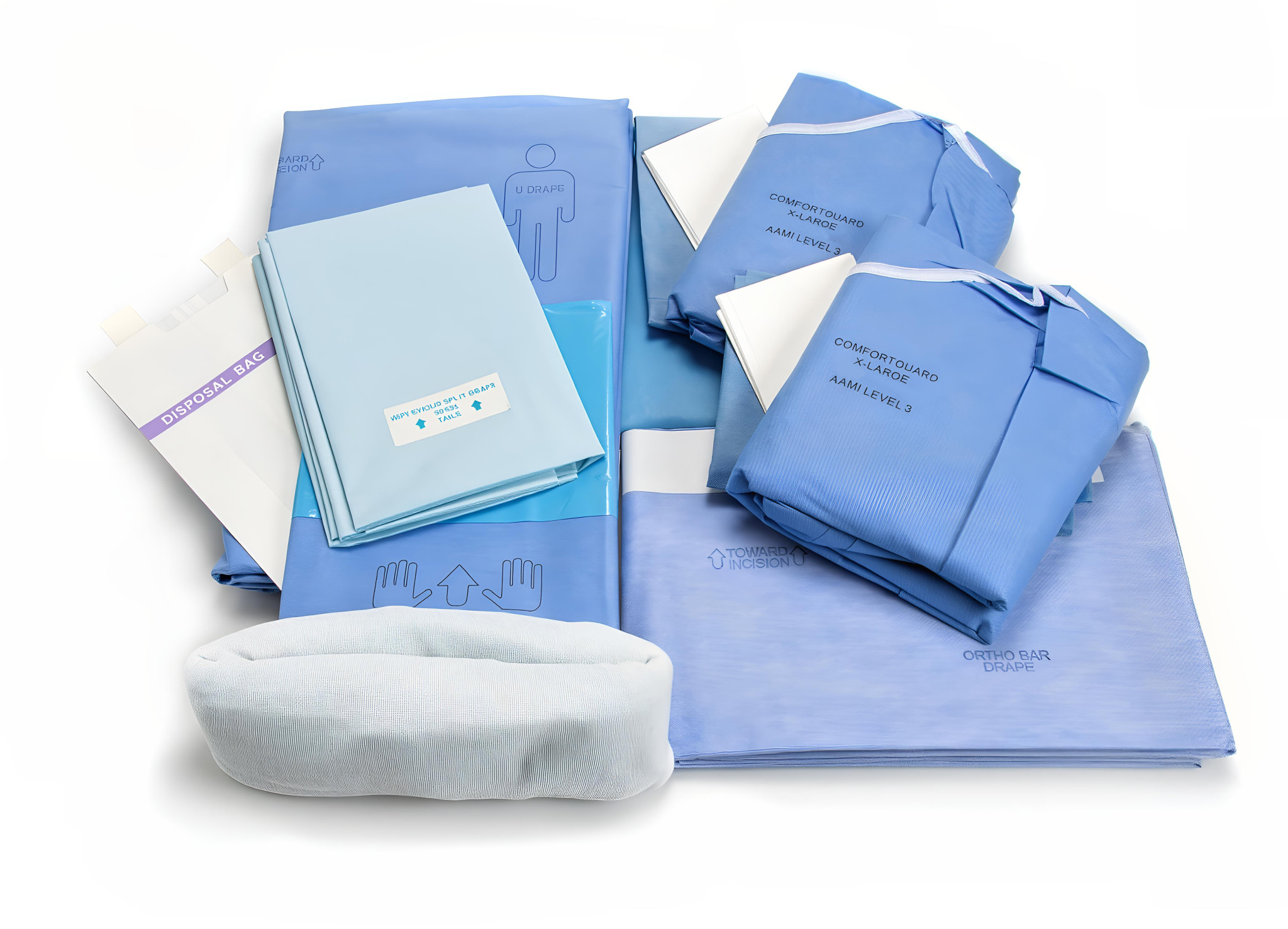
A modern surgical drape pack is a tailored procedural kit. Moving beyond a one-size-fits-all approach, packs are now configured for specific surgeries (e.g., orthopaedic total joint pack, cardiovascular pack, laparoscopic basic pack, cystoscopy pack). Opening one reveals a systematic assembly of components, each with a defined role:
• The Foundation: Large Sheet Drapes. These create the primary sterile field, covering the patient's body and the operating table.
• The Focus: Fenestrated Drapes. These feature a pre-cut opening (the fenestration) that isolates the precise surgical site. Adhesive strips or an impregnated adhesive ring around the fenestration secure it to the patient's skin, preventing migration and exposure of non-sterile areas.
• The Advanced Shield: Incise Drapes. Often iodine-impregnated, this transparent, adhesive film is applied directly to the prepped skin at the incision site. It acts as a final, immutable barrier, sealing off skin flora that could escape surgical prep.
• The Management System: Specialty Drapes & Pouches. This includes fluid-collection bags (e.g., for orthopaedic procedures), instrument table covers, and lithotomy drapes with integrated pouches for obstetrics/gynecology surgeries. Their job is to contain and channel fluids away from the field and the team.
• The Supporting Cast: The pack often includes surgeon's gowns , towels, and sometimes basic accessories like suction tubing or cautery pads, ensuring everything needed to establish the field is in one sterile package.
This modular, procedure-specific design minimizes waste, streamsetup time, and reduces the risk of error, allowing the surgical team to work with efficiency and confidence.
Weighing Single-Use vs. Reusable
The choice between single-use (disposable) and reusable (textile) surgical drape systems is one of the most significant decisions an OR leadership and procurement team will make. It’s a complex equation balancing infection control, cost, environmental impact, and operational workflow. There is no universal "right" answer, but a clear understanding of the trade-offs is essential for informed, facility-specific decision-making.
The Case for Single-Use (Disposable) Drape Packs:
• Guaranteed Barrier Integrity: Each pack is sterile, new, and delivers consistent, certified performance (e.g., AAMI Level 4) right out of the package. There is no risk of degradation from repeated laundering or microscopic damage.
• Infection Control Certainty: Eliminates the risk of cross-contamination from inadequate reprocessing. The integration of advanced features like iodine-impregnated films is seamless and reliable.
• Operational Efficiency: Reduces hospital laundry burden, eliminates the costs and space required for inventory management of textiles, and streamlines supply chain logistics to a predictable consumable model.
• Hidden Cost Elimination: While the per-unit cost is visible, it includes all costs of sterility and performance. There are no hidden expenses for water, energy, detergents, labor for inspection/repair, or capital depreciation of laundry equipment.
The Case for Reusable (Textile) Systems:
• Reduced Solid Waste Volume: A primary driver, aligning with hospital sustainability goals to minimize landfill contribution.
• Lower Per-Use Supply Cost: The initial purchase of a reusable inventory is high, but the cost-per-use for the fabric itself can become lower over hundreds of cycles.
• Material Feel: Some surgeons prefer the traditional drape and hand of high-quality cotton.
The most forward-thinking facilities often adopt a hybrid model, using single-use drapes for high-risk, high-fluid, or implant procedures where barrier integrity is non-negotiable, and reusable drapes for shorter, low-risk cases. This pragmatic approach optimizes for both safety and sustainability where appropriate.
Maximizing Drape Pack Effectiveness
The most advanced drape pack can only perform as designed if it is used correctly. Adherence to best practices is the final, critical link in the chain of protection.
1. Inspect Before Opening: Check the integrity of the outer packaging and the sterilization indicator. Do not use if compromised.
2. Meticulous Patient Skin Prep: Allow antiseptic solution to dry completely before applying any adhesive drape component. Moisture under the drape can harbor bacteria and compromise adhesion.
3. Sequential, Aseptic Application: Follow the manufacturer’s recommended draping sequence, typically moving from the incision site outward. Avoid reaching over an undraped area to drape a farther one.
4. Ensure Secure Adhesion: When applying fenestrated or incise drapes, smooth from the center outward, eliminating wrinkles and air pockets that can become fluid channels or lead to premature lifting.
5. Manage Cords and Tubing Securely: Use integrated adhesive channels or attachment devices to secure cautery cords, suction tubes, and camera cables. Never pierce the drape with sharp instruments or clamps, as this creates an instant breach in the barrier.
6. Monitor Throughout the Procedure: Be aware of fluid pooling. Use absorbent towels or the drape's pouches to manage it before strike-through becomes a risk. If a drape becomes contaminated or compromised, it must be replaced immediately.
7. Educate the Entire Team: Consistent practice is key. Include draping protocols and product-specific features in onboarding and ongoing competency training for all perioperative staff.
Ready to Optimize Your OR's Approach?
The surgical drape pack is a critical first line of defense in infection prevention and procedural efficiency. Its performance should be a guarantee, not a variable. In the high-stakes calculus of the modern operating room, every element carries weight—from clinical outcomes to operational efficiency. For procurement and surgical leaders, the choice of a surgical drape pack is often viewed through this dual lens.
As a dedicated manufacturer, Boenmedical controls every stage of production to deliver that guarantee. Our surgical drape pack series represents a commitment to precision engineering, evidence-based design, and consistent quality. Each product in our comprehensive series is built to deliver uncompromising barrier protection, intuitive functionality, and supply chain reliability, ensuring that the foundation of your sterile field supports the full spectrum of surgical and economic goals.
We invite you to explore how our purpose-built solutions provide the durable protection and intuitive handling that modern surgical teams require—and that procurement teams can confidently standardize.
SHARE: