

Your Quick Guide to Sterile Swabs
Your Quick Guide to Sterile Swabs
2026-01-01 10:01
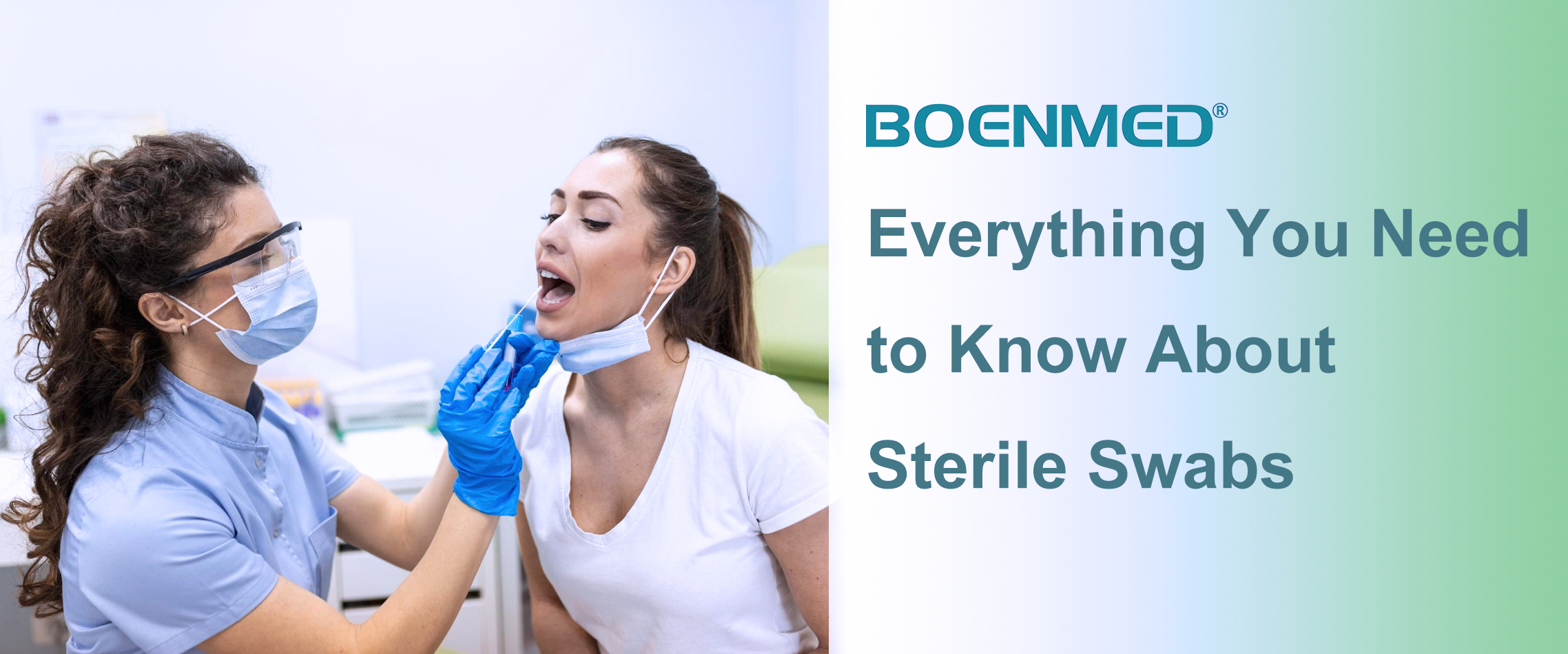
Sterile Swabs: What You Really Need to Know
Proper specimen collection is critical for obtaining accurate and reliable diagnostic test results. It helps prevent specimen rejection or contamination, avoids treatment delays and additional costs, maintains high-quality patient care and operational efficiency, ensures the safety of staff and patients by minimizing exposure risks, and enhances patient trust in and adherence to medical recommendations. Therefore, prioritizing correct specimen collection techniques is an indispensable component of delivering high-quality healthcare services.
A sampling swab is a medical or laboratory consumable used to collect biological specimens. It is used to gather trace samples- such as cells, viruses, bacteria, or DNA- from the human body (e.g., the oral cavity, nasal cavity, throat, cervix, etc.) or from the environment (e.g., object surfaces, air, water) for subsequent testing, culturing, or analysis.
A sampling swab consists of a handle (shaft) and a sampling head (tip). The sampling tips are typically made from flocked nylon, rayon, polyester fiber, or medical-grade sponge. The shaft is usually constructed from medical-grade plastic (e.g., PS, ABS, or PP) or wood; most shafts feature a "break-point" design to facilitate easy placement of the sampling head into a specimen collection tube.
2. Why Are Sampling Swabs Necessary? How does it differ from a regular cotton swab?
Sampling swabs are an indispensable foundational tool in modern molecular diagnostics, precision medicine, and public health surveillance.
2.1. Standard Cotton Swabs Have a Very Low Release Rate
The fibers in standard cotton swabs (such as cosmetic swabs or general medical cotton swabs) are arranged in a coiled, interwoven pattern. Once a liquid specimen is absorbed, the majority of it becomes firmly trapped within the crevices of these fibers, resulting in a release rate that is typically below 50%.
This implies that if a patient has a very low viral load (e.g., during the early stages of infection), a traditional cotton swab may collect only a minute amount of sample; furthermore, during the testing process, this limited sample may fail to elute effectively from the swab. The result is a "false negative"- meaning the patient is indeed infected, yet the test fails to detect the presence of the pathogen.
BOENMED sampling swabs (particularly the flocked nylon swabs) utilize a vertical fiber structure. This design allows the specimen to be adsorbed onto the surface of the fibers, achieving a release rate of over 95% and thereby minimizing the risk of missed detections.
2.2. Standard Cotton Swabs Can Interfere with Test Results, Leading to Test Failure
Natural cotton contains substances- such as fatty acids- that can strongly inhibit the Polymerase Chain Reaction (PCR), which is the core technology underlying nucleic acid testing. If standard cotton swabs are used for sampling- even if the virus is successfully collected-the extracted sample may "inhibit" the detection enzymes, leading to amplification failure and resulting in a false negative.
The synthetic materials (such as nylon, polyester, and rayon) used in BOENMED sampling swabs undergo rigorous processing; they are free of PCR inhibitors and DNase/RNase, ensuring they do not interfere with the detection process.
2.3. Varied Shapes to Suit Different Body Sites
Nasal swabs require an extremely slender tip (≤3 mm) and a long shaft (≥15 cm) to reach deep into the nasal cavity without damaging the mucous membranes.
Cervical swabs require a brush-like tip and a flexible, long shaft to effectively scrape and collect a sufficient quantity of cervical cells.
Urethral swabs must be significantly thinner than standard cotton swabs to ensure patient comfort and tolerability.
2.4. Sterile and Free of Harmful Residues—Safe for Human Use
Sampling tools intended for use on human mucous membranes (nasal, pharyngeal, cervical, or urethral) must be sterile; otherwise, they risk introducing environmental bacteria into the body and causing infection. Standard cotton swabs are often either non-sterile or processed using rudimentary methods, offering no guarantee of safety.
Medical-grade sampling swabs undergo sterilization via ethylene oxide or gamma irradiation, and are rigorously tested for residues (e.g., ethylene oxide residues ≤10 µg/g), ensuring their safety for human use.
BOENMED offers sampling swabs in various specifications to meet the precise sampling requirements of these specialized anatomical sites.
5. Seamless Integration with Detection Systems
During the testing process, the swab tip is typically placed into a transport tube for subsequent automated processing by analytical equipment. Sampling swabs are designed with a pre-set breakpoint, allowing the tip to snap off cleanly and drop fully into the tube with a gentle bend, without the shaft becoming lodged in the tube opening. Standard cotton swabs lack this breakpoint; attempting to force them into the tube may result in sample contamination or damage to the testing equipment.
3. Classification of Sampling Swabs
The sampling swabs are most classified based on their material composition or intended application site.
3.1. Classification by Material
Features: Fibers are arranged vertically; release rate ≥95%; free of PCR inhibitors.
Applications: Nucleic acid detection, viral sampling, HPV testing, DNA/RNA analysis.
Features: Good absorbency, soft texture, and high cost-effectiveness.
Applications: Viral culture, rapid diagnostics, routine bacterial sampling.
Features: Free of inhibitory substances; moderate release rate.
Applications: PCR testing, self-sampling nasal swabs, and assays sensitive to inhibitors.
Features: Extremely soft texture; strong absorbency.
Applications: Sampling for infants and toddlers, individuals with sensitive mucous membranes, environmental sampling.
Features: Extremely low cost; high absorbency but low release rate.
Applications: Limited to wound medication application and routine bacterial culture (non-PCR).
3.2. Classification Based on Application Scenarios
A. Nasopharyngeal Swabs
Characteristics: Slender and elongated; tip diameter ≤ 3 mm; long handle (≥ 15 cm); features a breakpoint.
Applications:
A nasopharyngeal swab is a device used to collect nasal secretions from the back of the nasal cavity and the throat (the nasopharynx).
The collected samples are used to detect the presence of pathogens or disease markers.
Commonly used for diagnosing viral infections such as influenza (e.g., for flu surveillance), coronaviruses (SARS, MERS, COVID-19), pertussis (whooping cough), and diphtheria.
Common Materials:
The swab consists of a thin plastic shaft and an absorbent tip made of cotton, polyester, or flocked material.
Some swab handles are constructed using nickel-chromium or stainless steel wire.
Flocked swabs (featuring nylon fibers oriented perpendicular to the shaft) have been demonstrated to collect a larger volume of samples compared to traditional fiber swabs.
Material composition may vary depending on the specific diagnostic test being performed.
B. Oropharyngeal Swabs
Characteristics: Slightly wider; tip diameter approximately 4–6 mm; length 12–15 cm; some models feature a breakpoint.
Applications:
Oropharyngeal swabs are used to collect cellular samples from the oropharynx—the region of the throat located at the back of the oral cavity—specifically including the posterior pharyngeal wall and the tonsillar area.
Their purpose is to detect the presence of pathogens or viral particles, such as SARS-CoV-2 (used for COVID-19 testing).
Oropharyngeal swabs are often used in conjunction with nasopharyngeal swabs to facilitate more comprehensive sampling of the upper respiratory tract.
The collected cellular material—which may contain viruses or pathogens—can subsequently be analyzed using methods such as PCR.
Common Materials:
The swab tip is manufactured using synthetic fibers, typically polyester, rayon, or flocked material.
The fibers at the tip are soft and arranged in a clustered configuration (perpendicular fibers) to effectively capture cells.
The swab shaft is designed to be sufficiently flexible to allow access to the deep oropharyngeal region of the throat during sample collection.
C. Cervical Swabs
Features: Features a wide or brush-like tip, a long flexible shaft, and typically includes a breakpoint.
Uses:
Cervical swabs are used to collect samples from the genitourinary tract, an area encompassing the vagina, cervix, urethra, and surrounding regions. These samples can be utilized to screen for sexually transmitted infections (STIs), vaginitis, urethritis, and other genitourinary tract infections or conditions.
Common Materials:
Common materials used for the tips of cervical swabs include flocked fibers, medical-grade sponge, and rayon. The swab shaft is typically made of plastic or wire to ensure sufficient rigidity during sample collection.
D. Rectal / Anal Swabs
Description and Uses:
An anal swab is a type of medical swab primarily composed of absorbent material, used specifically to collect samples from the rectum.
They are employed to aid in the diagnosis of certain infections, diseases, or conditions—such as sexually transmitted infections (STIs), gastrointestinal disorders, or rectal cancer.
Samples collected from the anal/rectal region are subsequently analyzed in a laboratory to identify the presence of pathogens, abnormalities, or other medical issues.
Common Materials:
The specific anal swabs described here feature a tip made of absorbent cotton material.
The swab shaft/handle is constructed from polypropylene (PP) plastic.
Cotton is selected for its softness and non-irritating properties, making it gentle on sensitive areas such as the rectum.
Cotton fibers possess a high capacity for absorbing and retaining fluids, rendering them suitable for sample collection.
E. Wound / Abscess Swabs
Uses:
Swab sampling of wounds is a common method of microbiological specimen collection in primary care settings.
The objective is to identify infectious microorganisms present within a wound in order to guide appropriate antibiotic therapy.
Swab sampling is recommended only when clinical signs of infection are evident—specifically when the wound is deteriorating, enlarging, or failing to heal properly.
Swabbing wounds that show no signs of infection may result in the identification of colonizing, non-pathogenic bacteria rather than the actual pathogens responsible for an infection.
Common Materials:
Sterile swabs featuring tips made of cotton, alginate, or rayon are commonly used for this purpose.
Moisten the swab tip with sterile saline solution to facilitate the collection of bacteria during sampling.
During sampling, use a zigzag motion while rotating the swab to ensure that the entire tip makes contact with the wound area.
For any sinus tracts or cavities within the wound, a separate swab may be used for sampling.
The swab specimen is then labeled with the patient's details and sent to the microbiology laboratory for bacterial culture and antibiotic susceptibility testing.
4. Correct Specimen Collection Methods
Strict adherence to correct specimen collection and handling protocols is critical for obtaining accurate and clinically meaningful microbiological laboratory results. Every step—from pre-collection preparation to actual collection, labeling, transport, and delivery to the laboratory—must be executed with meticulous care to avoid contamination, alterations in microbial flora, compromised specimen quality, and other errors that could render laboratory testing entirely valueless. Deviations from established protocols can introduce errors that lead to misleading results, inaccurate diagnoses, inappropriate treatment, and compromised patient outcomes.
A.How to do a nasopharyngeal swab?
(1) When collecting a nasopharyngeal swab specimen, use a flexible, flocked swab with a small tip.
(2) Measure the distance from the patient's nostril to the nasopharynx; this corresponds approximately to the midpoint between the nostril and the base of the ear.
(3) Maintaining this measured length, gently insert the swab along the floor of one nostril, directing it straight back rather than upward.
(4) Do not insert the swab beyond the measured nasopharyngeal distance.
(5) Once the swab reaches the nasopharynx, rotate it 2–3 times while holding it in place for 5 seconds.
(6) Carefully withdraw the swab and place it into a tube containing viral transport medium. Finally, break off the excess portion of the swab shaft at the pre-scored line to allow the tube to be securely capped.
(7) Correct technique is essential for collecting an adequate specimen from the nasopharynx while avoiding injury to the patient.
B. How to do an oropharyngeal swab?
(1) Before beginning, wash your hands and prepare the Swab specimen collection kit, which contains a pink-capped transport tube (containing reagent) and an individually wrapped swab.
(2) Carefully open the swab packaging, taking care not to touch the soft tip.
(3) Discard the larger, spare swab. Holding the collection swab, unscrew the cap of the transport tube, ensuring that the contents do not spill.
(4) Immediately place the swab into the open transport tube.
(5) Locate the pre-scored line on the swab shaft and grasp the shaft at this line using your thumb and index finger.
(6) Instruct the patient to open their mouth wide and depress their tongue. Thoroughly swab the pharyngeal region, including the tonsils, posterior pharyngeal wall, uvula, and the surrounding areas.
(7) Withdraw the swab and carefully break the swab shaft at the score line against the inner wall of the tube, taking care to avoid splashing. Submerge the swab tip into the reagent solution and securely close the cap of the transport tube.
(8) Invert or gently shake the capped tube 3–4 times to ensure the specimen is thoroughly dispersed within the reagent. Avoid generating foam. Label the tube with the patient's identification details and the date of collection.
(9) Transport the specimen at room temperature. It may be stored in this manner for up to 3 weeks prior to testing.
C. How to do a oral swab?
(1) First, use an oral swab to remove any oral secretions or debris from the surface of the lesion.
(2) Next, using a second, fresh swab, firmly swab the lesion itself, taking care to avoid collecting surrounding normal tissue.
(3) A superficial swab that merely brushes lightly over the surface is insufficient; sampling should be performed by firmly sweeping across the lesion.
(4) Whenever possible, submit actual tissue samples of the lesion or fine-needle aspirates rather than swabs alone, as these specimen types are more conducive to optimal diagnostic testing than swabs.
(5) Proper sampling technique to obtain cells or material from within the lesion is critical for achieving an accurate laboratory diagnosis.
D. How to do an anterior nasal swab?
(1) Using a sterile swab, gently insert it into one nostril until resistance is encountered at the turbinates—approximately 1–2 centimeters into the nasal cavity.
(2) Once inserted to this depth, firmly rotate the swab against the surface of the nasal mucosa for 3 seconds.
(3) Gently press against the outside of the nose with a finger to ensure good contact between the swab and the inner wall of the nasal cavity.
(4) Then, using the same swab, collect a specimen from the other nostril using the identical sampling technique.
(5) Correct insertion depth, rotation, and compression techniques are essential for collecting a sufficient sample of nasal secretions from both turbinate regions.
(6) Avoid inserting the swab too deeply into the nasopharynx.
E. How to do a genital swab test?
For genital cultures intended for the detection of *Neisseria gonorrhoeae*, an Amies liquid transport swab should be used. Immediately transport the swab to the microbiology laboratory after collection.
1. Cervical/Vaginal Specimens:
Before beginning, prepare the Cervical Sampling Kit:
(1) Open Package A, which contains the transport tube and collection swab, and set the tube aside temporarily.
(2) Carefully open the swab packaging, taking care not to touch the soft tip.
(3) Insert the cervical swab into the vagina/cervix and rotate it clockwise inside the canal for 10–30 seconds.
(4) Gently withdraw the swab.
(5) While holding the sampling swab, carefully unscrew the cap of the transport tube to prevent the contents from splashing out.
(6) Immediately place the sampling swab into the opened transport tube.
(7) Locate the score line on the swab shaft; hold the shaft at this point and gently snap off the top of the swab so that it breaks against the rim of the tube. Take care to avoid splashing.
(8) Tightly reseal the tube cap, ensuring that the swab tip is fully immersed in the HPV preservation solution.
(9) Invert the capped tube or gently shake it 3–4 times to ensure the sample is thoroughly dispersed within the reagent. Do not create foam.
(10) Label the tube with the patient's identification information and the date of collection.
2. Male Urethral Specimens:
(1) Instruct the patient not to urinate for at least one hour prior to collection.
(2) Insert a small, narrow-tipped urethral swab 2–4 cm into the urethral canal.
(3) Once inserted, gently rotate the swab to collect the sample.
(4) Keep the swab in place for 2 seconds to facilitate absorption, then slowly withdraw it.
F. How do you perform a rectal swab?
(1) Before beginning, wash your hands and prepare the Anal Swab Sampling Kit, which contains a separately packaged anal swab and preservation solution.
(2) Carefully open the swab packaging, taking care not to touch the soft tip.
(3) While holding the anal swab, carefully unscrew the cap of the transport tube to prevent the contents from splashing out.
(4) Immediately place the swab into the opened transport tube. (5) Locate the score line on the anal swab shaft; hold the shaft at the score line using your thumb and index finger.
(6) Gently insert the swab approximately 1 cm past the anal sphincter and rotate it gently to collect the specimen.
(7) Withdraw the anal swab, then gently snap the shaft at the score line against the rim of the tube to break it off. Take care to avoid splashing.
(8) Tightly reseal the cap of the transport tube, ensuring that the swab tip remains immersed in the reagent.
(9) Invert the capped tube or gently shake it 3–4 times to ensure the specimen is thoroughly dispersed within the reagent. Avoid creating foam.
(10) Label the tube with the patient's identification information and the date of collection.
(11) Transport the specimen at room temperature. It may be stored in this manner for up to 3 weeks prior to testing.
G. How do you do a wound swab test?
For optimal recovery of microorganisms from an abscess, tissue specimens or needle aspirates are far superior to swab specimens. First, clean any surface exudate using sterile saline or 70% alcohol. Then, use a syringe and needle to aspirate material directly from the abscess cavity.
For aspirated specimens, clean the rubber septum of the anaerobic transport vial with alcohol and allow it to dry completely for 1 minute before inoculation. Insert the needle through the septum and inject the entire volume of aspirated abscess material onto the surface of the agar within the vial.
If a swab specimen must be collected, insert the swab deep into the base of the abscess lesion and firmly sample the fresh margins of the abscess. Avoid merely swabbing the surface.
Tissue or aspirated specimens should be transported to the laboratory as soon as possible—ideally within 2 hours of collection—to preserve microbial viability. It is critical to accurately collect the specimen from the active interior of the abscess, rather than solely from the surface area, to ensure the accurate isolation of pathogenic organisms.
5. Conclusion
Proper specimen collection using swabs constitutes the critical first step toward obtaining accurate and meaningful results from microbial cultures. From selecting the appropriate swab type and transport medium, to mastering specific collection techniques tailored to various specimen sources, and finally to carefully handling swabs to preserve microbial viability and prevent contamination—meticulous attention to detail is paramount throughout the entire process of swab-based specimen collection.
Ensuring the delivery of high-quality specimens to the laboratory is a collaborative effort, requiring close cooperation among clinicians, nurses, laboratory personnel, and all other individuals involved in the specimen management process. As the foundational step in this sequence, the selection of the appropriate sampling swab is of utmost importance. BOENMED is a distinguished Chinese manufacturer of sampling swabs, offering a wide range of swabs in various materials and sizes. We also provide custom manufacturing services tailored to our clients' specific requirements. Please feel free to contact us to discuss your needs; we look forward to hearing from you.
SHARE: